
Columbia University Awarded LEED Gold for Li Lu Law Library
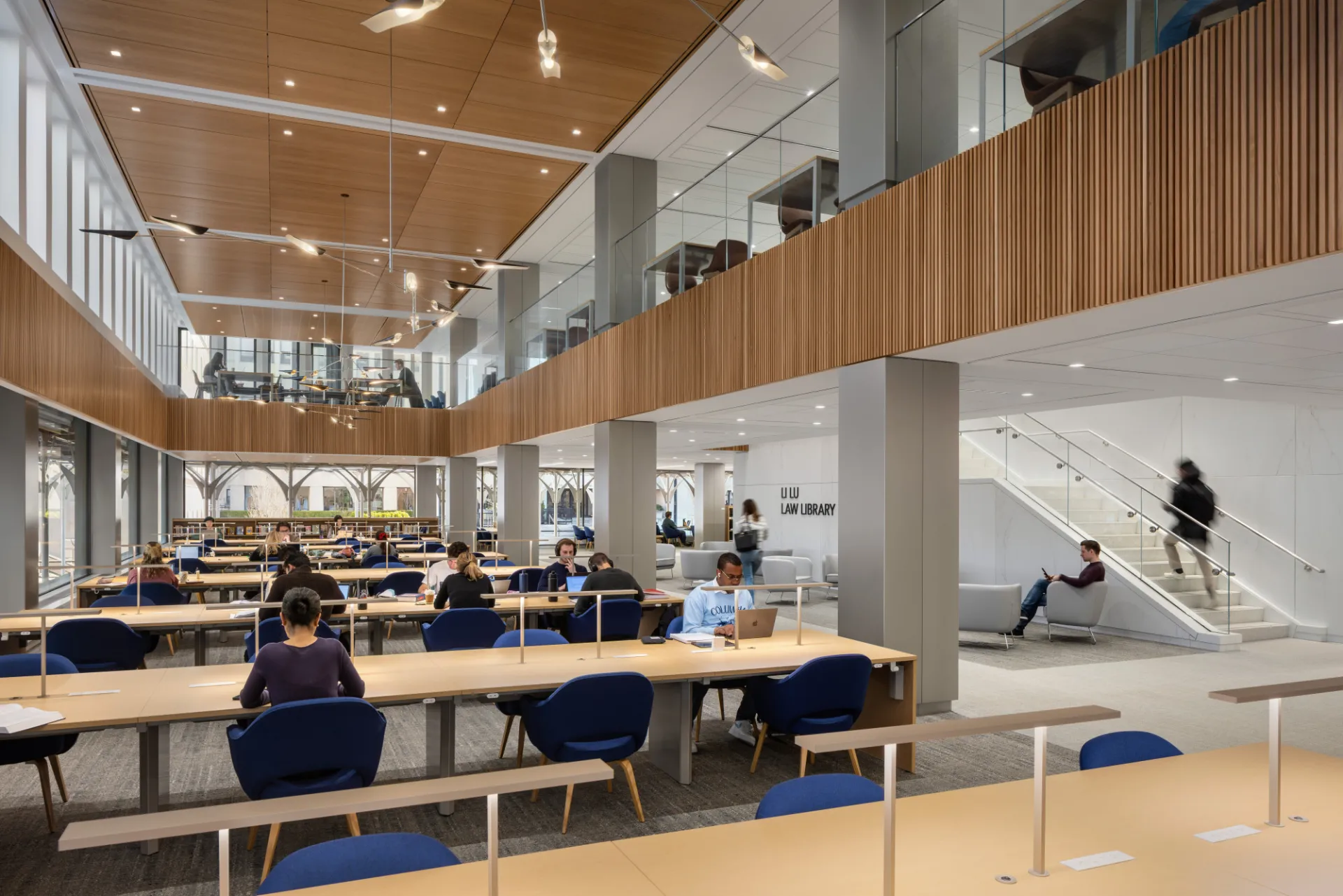
Columbia University continued its momentum of sustainable construction with the Li Lu Law Library in Jerome L. Greene Hall, which received LEED® Gold certification from the U.S. Green Building Council (USGBC).
LEED, or Leadership in Energy and Environmental Design, is the foremost green building certification program that measures how sustainable a building is in areas including energy use, water efficiency, material selection, and indoor air quality.
“The Li Lu Law Library’s LEED Gold certification demonstrates how campus spaces can be reimagined to advance both the University’s academic mission and its sustainability goals,” said David M. Greenberg, executive vice president of University Facilities and Operations. “The result is a high-performing, dynamic space that supports rigorous study and research while contributing to a more efficient and sustainable campus.”
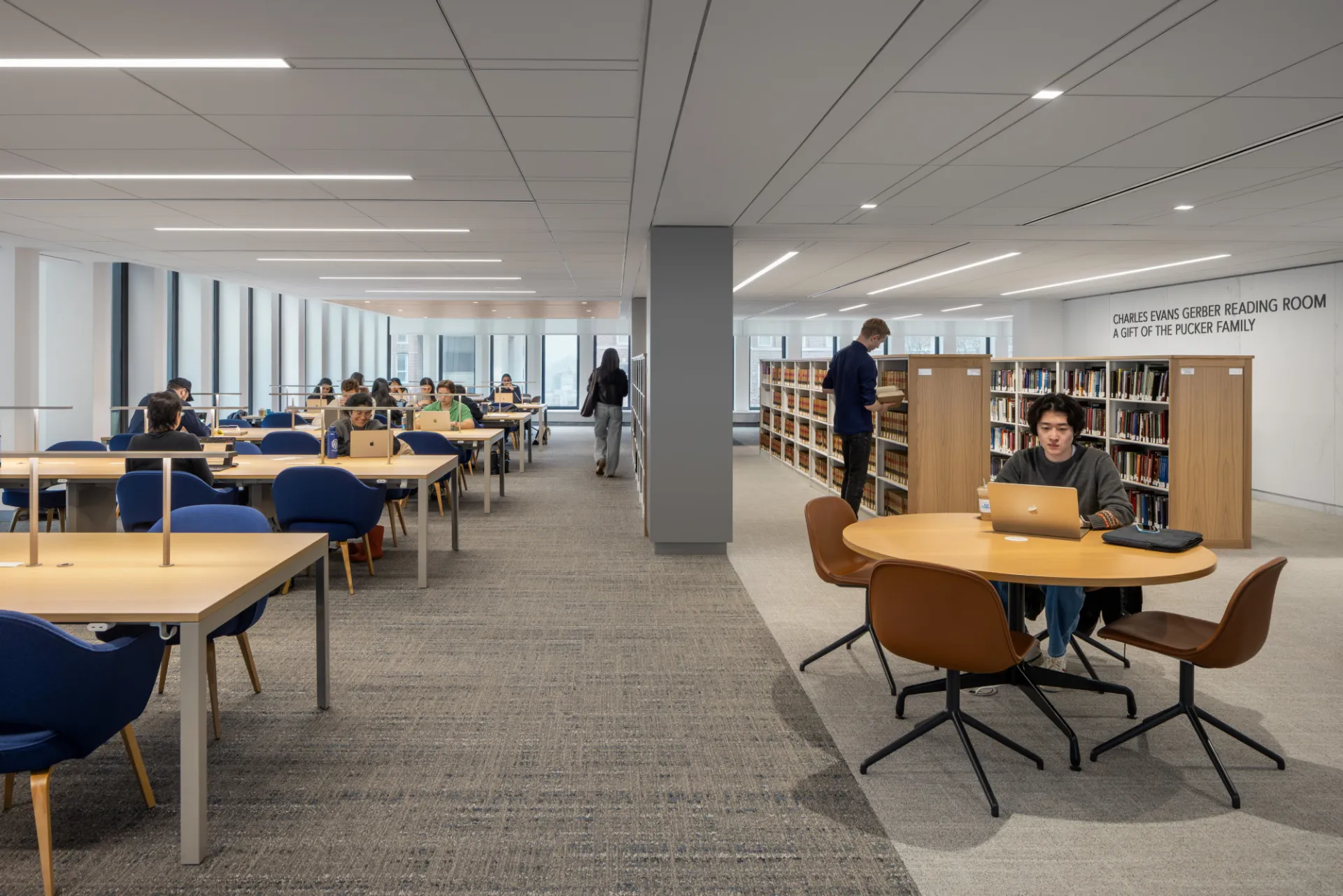
The Li Lu Law Library achieved its LEED Gold rating by utilizing a wide range of sustainable design and construction strategies, including prioritizing energy performance, indoor environmental quality, responsible material selection, and occupant wellness. Highlights include:
- Integrated lighting controls with daylight and occupancy sensors maximize energy savings and occupant comfort.
- Natural materials were used wherever possible to promote biodiversity and integrate sound mitigation.
- All restrooms in the project include the installation of low-flow faucets, low-flow flush valves, and water-efficient plumbing fixtures.
- Over 97 percent of construction and demolition waste was diverted from landfills.
- Low-VOC (volatile organic compounds) building materials were used throughout construction to meet Columbia’s indoor air quality standards.
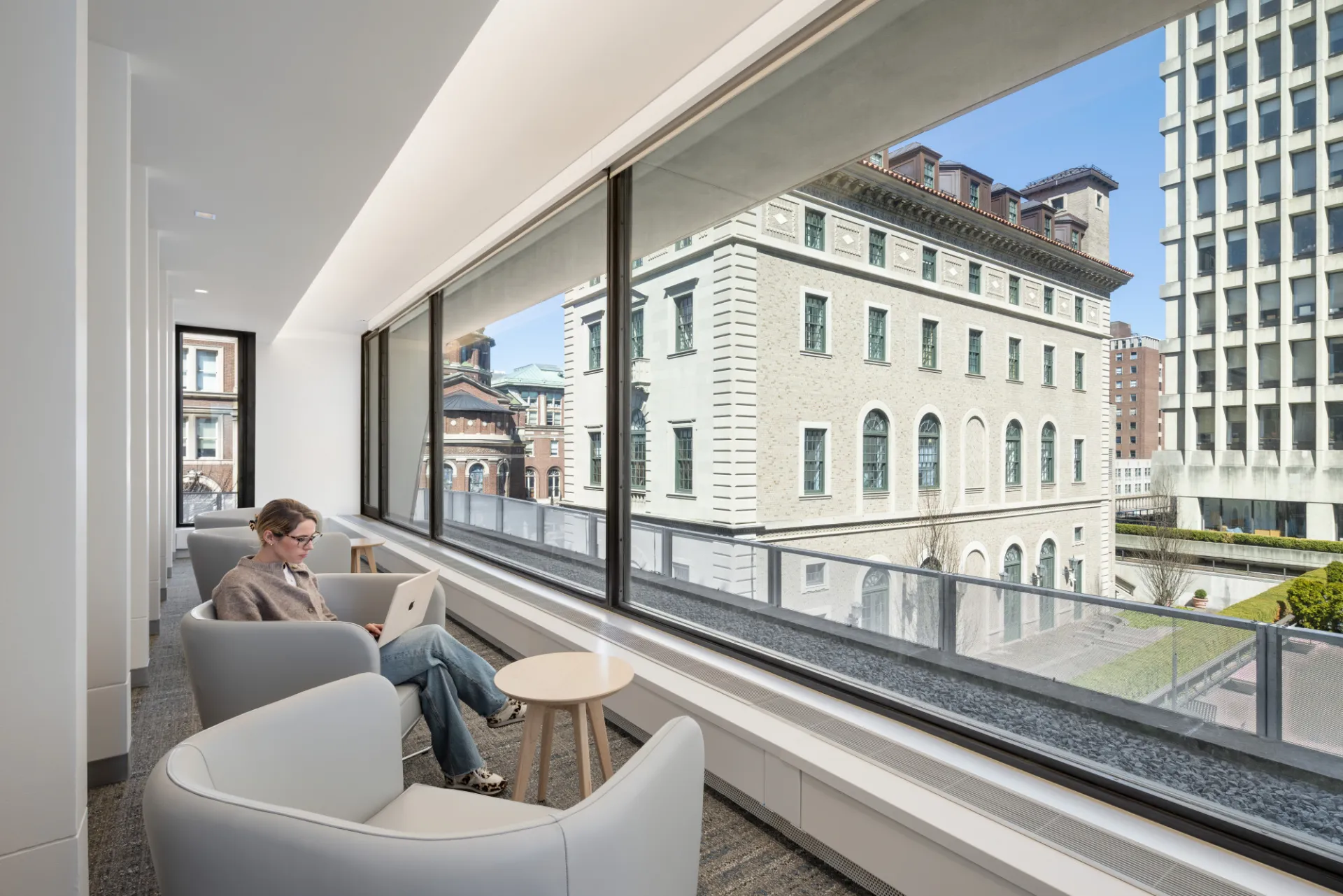
- Open sight lines and clear views of the outdoors were captured to increase occupant wellness and harness available daylighting.
- Rather than pursuing demolition and new construction, maintaining the existing structure allowed the team to leverage the environmental and cultural value of the building.
- Jerome L. Greene Hall’s proximity to several subway and bus lines promotes the use of public transportation, ultimately reducing emissions.
“The Li Lu Law Library has transformed the life of the Columbia Law School community,” said Daniel Abebe, Dean and Lucy G. Moses Professor of Law. “Achieving LEED Gold certification realizes a long-held ambition for the project, and the Law School takes pride in advancing Columbia’s commitment to sustainability.”
Designed by Perkins Eastman, with input from students, faculty, and staff, the Li Lu Law Library is fully modernized with an open, light-filled design and a variety of spaces that support modern legal research, scholarship, and collaboration. Comprising 50,000 square feet across three floors, the library features a striking two-story reading room; more than 600 study seats (a 60 percent increase in seating capacity from the prerenovation layout); flexible and adaptable group study rooms; and state-of-the-art technology.
The Li Lu Law Library’s LEED Gold certification follows the recent LEED Gold certification of 600 W. 125th Street, a new 34-story building for graduate students and faculty. These projects join a growing list of LEED-certified projects across the University, including Columbia Business School, The Square, Lee C. Bollinger Forum, Jerome L. Greene Science Center, and Lenfest Center for the Arts. Columbia’s overall Manhattanville campus plan has also achieved a LEED-ND Platinum recognition for its environmentally sustainable design – the first higher education institution in the U.S. and the first organization in New York City to receive this designation.
In addition to LEED Gold, the Li Lu Law Library earned an Interior Design Award in the Academic Libraries—Over 30,000 Square Feet category as part of the 10th Biennial American Library Association (ALA)/IIDA Library Interior Design Awards, which honors excellence and innovation in library interior design.
LEED® is a registered trademark of the U.S. Green Building Council.